Skip to content

Plant guide · California

California milkweeds for monarchs

Monarch caterpillars eat only milkweed. California has its own native milkweeds, and eight of them are sold by native-plant nurseries. They are not interchangeable: Narrowleaf Milkweed grows wild in nearly every county, while Rush Milkweed is a desert plant.

The table shows how widely each one grows wild. Which one belongs in your yard depends on your address.

See which of these grow wild near your address. Free preview, no account.

At a glance

  • Narrowleaf Milkweed

    Asclepias fascicularis

    Wild in 55 of 58 counties · Low water · Full sun

    April, May, June, July, August, September, October
  • Showy Milkweed

    Asclepias speciosa

    Wild in 45 of 58 counties · Low water · Full sun

    May, June, July, August, September
  • Woollypod Milkweed

    Asclepias eriocarpa

    Wild in 39 of 58 counties · Very low water · Full sun

    May, June, July, August, September, October
  • Heartleaf Milkweed

    Asclepias cordifolia

    Wild in 28 of 58 counties · Low water · Part shade

    March, April, May, June, July
  • California Milkweed

    Asclepias californica

    Wild in 21 of 58 counties · Very low water · Full sun

    March, April, May, June, July
  • Woolly Milkweed

    Asclepias vestita

    Wild in 12 of 58 counties · Very low water · Full sun

    April, May, June, July
  • Desert Milkweed

    Asclepias erosa

    Wild in 8 of 58 counties · Very low water · Full sun

    March, April, May, June, July, August, September, October, November
  • Rush Milkweed

    Asclepias subulata

    Wild in 4 of 58 counties · Very low water · Full sun

    January, February, March, April, May, June, July, August, September, October, November, December

The plants

Each with its wildlife value from 1 to 100; 50 is a typical California native. Open a card for the details.

Narrowleaf Milkweed

Asclepias fascicularis

Size
1.5–3 ft tall · 1–2 ft wide
Water
Low
Light
Full sun
Bloom
Spring, Summer, Fall · white
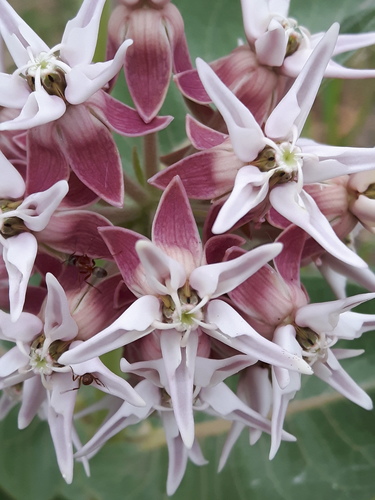
Showy Milkweed

Asclepias speciosa

Size
2–5 ft tall · 2–3 ft wide
Water
Low
Light
Full sun
Bloom
Spring, Summer, Fall · pink
Woollypod Milkweed

Asclepias eriocarpa

Size
1–3 ft tall · 1.5–3 ft wide
Water
Very low
Light
Full sun
Bloom
Spring, Summer, Fall · cream
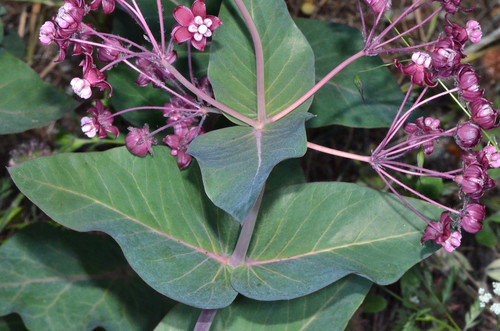
Heartleaf Milkweed

Asclepias cordifolia

Size
1–3 ft tall · 1–2 ft wide
Water
Low
Light
Part shade
Bloom
Spring, Summer · purple
California Milkweed

Asclepias californica

Size
0.5–2 ft tall · 1.5–3 ft wide
Water
Very low
Light
Full sun
Bloom
Spring, Summer · pink
Woolly Milkweed

Asclepias vestita

Size
1–2 ft tall · 1.5–2.5 ft wide
Water
Very low
Light
Full sun
Bloom
Spring, Summer · yellow
Find at
Native-plant nurseries
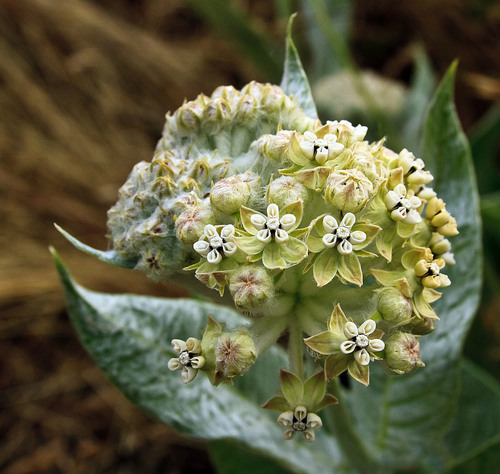
Desert Milkweed

Asclepias erosa

Size
2–5 ft tall · 2–3 ft wide
Water
Very low
Light
Full sun
Bloom
Spring, Summer, Fall · cream
Find at
Native-plant nurseries
Rush Milkweed

Asclepias subulata

Size
2–4 ft tall · 2–3 ft wide
Water
Very low
Light
Full sun
Bloom
Spring, Summer, Fall, Winter · cream

Good to know

Skip tropical milkweed
Tropical milkweed (Asclepias curassavica) is the one most garden centers sell. It is not native, and in California's mild winters it keeps growing, so a parasite that infects monarchs builds up on it. The Xerces Society advises planting native milkweeds instead. Source: Xerces Society, 2023
Near the coast, check the distance first
Western monarchs spend the winter in groves along the coast. The Xerces Society asks people not to plant milkweed within five miles of the coast north of Santa Barbara, or within one mile of it south of Santa Barbara. Our reports leave milkweed off the list within those distances. Source: Xerces Society, 2023
Expect most of them to vanish in winter
Most of these die back to the ground in fall and come up again in spring. That is normal, so don't pull them out.
Wear gloves
Milkweed's milky sap irritates skin and eyes.

How we chose these. Every California-native milkweed in our catalog that native-plant nurseries sell, ordered by how many counties it grows wild in. County ranges come from floras and herbarium records. A report for your address goes further: it keeps only plants that have been collected growing wild near you. How the wildlife value is scored

Find out which belong at your address

Enter your address and the free preview shows your land, your soil and climate, and a first look at the natives that grow wild near you, no account needed. The full report is the whole shortlist for your address, a list you build yourself, and a printable nursery list for $40.

Planting season starts with the first rains. Now is when to plan.