Replacing a lawn in Los Angeles? Here’s what to plant.
Turf-rebate programs pay you to take the grass out — but they leave you with the harder question. LADWP customers can get $5 a square foot — $3 from LADWP plus $2 from Metropolitan, not $5 on top of it — on 250–5,000 sq ft, up to $25,000. Approval has to come before you remove anything.
See what belongs at your address. Free preview, no account.
What the programs ask of your plant list
At least three plants per 100 square feet
Take out 500 sq ft and you need at least 15 plants; trees you keep in the converted area count toward it. The hard part is choosing which 15 will live through their first summer on your soil, slope and rainfall.
Turf-looking grasses don’t qualify — even native ones
The residential program is explicit that “turf, turf-looking grasses, or invasive plants do not qualify even if they are drought-tolerant or California native.” We rank plants by the wildlife they support, not by how a reviewer will judge their appearance, so a native bunchgrass on your list is not automatically an eligible one. Check anything lawn-like against your agency before you plant it.
Invasive species don’t qualify either
Even drought-tolerant ones, and even some sold as California natives. Every plant we recommend is screened against the California Invasive Plant Council list, so an invasive can’t reach your report by mistake. That screen is ours; passing it is not the agency’s approval.
This is a plant worksheet, not an application. The residential program also requires a stormwater feature designed to capture rainfall — a rain garden, swale, dry riverbed or cistern — and you must apply for and receive approval to proceed before you remove any turf. Neither is something a plant list can satisfy or prove. Read your agency’s current requirements in full before you start.
Amounts above verified 3 November 2026. Rebate terms and funding change during the season — confirm current requirements with LADWP and Metropolitan Water District before you start.
What belongs at a Los Angeles address
This is a real report for a public address in Los Angeles — the Los Angeles Plain ecoregion, with its actual soil, elevation and rainfall. Your own lot will differ: two homes a mile apart can sit on completely different ground.
Southern California coastal streams → Pacific Ocean
6 of the 175 plants that belong here
One or two from each plant type, each with its wildlife value from 1 to 100. Every one is native to Los Angeles County and sold by California native‑plant nurseries.
Keystone
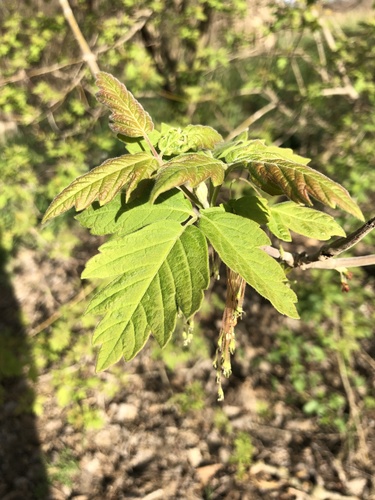
Acer negundo
Size
30–60 ft tall ·30–50 ft wide
Water
Moderate
Light
Sun or shade
Leaves
Bare in winter
Bloom
Spring · green
118 caterpillar speciesSamaras for birdsErosion control
Box Elder feeds the caterpillars of 118 native moths and butterflies in California, which eat its leaves.
Box Elder feeds the caterpillars of 118 native moths and butterflies in California, which eat its leaves.
Enter your address for a free preview: your land, your soil and climate, and a first look at what belongs there. No account needed. The full report, $40, is the whole list for your address, a list you build yourself that scores your picks for wildlife, and a printable nursery list with room to write quantities.
Planting season starts with the first rains. Now is when to plan.
 Keystone